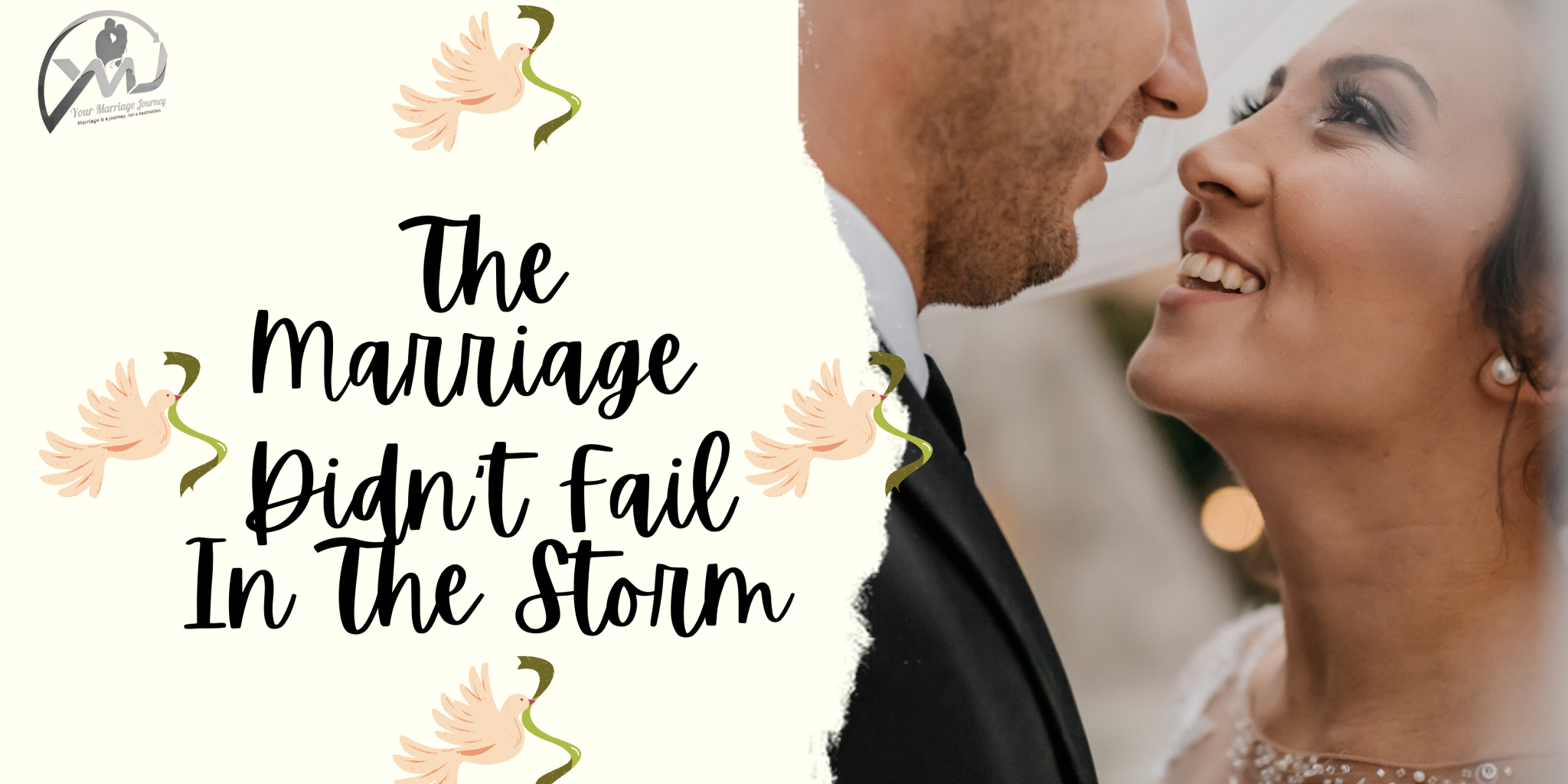
The Marriage Didn’t Fail in the Storm
It Failed in the Foundation
The house looked perfect.
White brick. Black shutters. Floor-to-ceiling windows. A dream kitchen. The kind of home people slow down to admire. From the outside, everything looked beautiful. Every detail had been selected with care. The colors matched. The rooms were warm. The lighting was right. People walked in and complimented the design. Friends admired it. Family approved of it. Social media would have loved it.
Then one morning, a crack appeared.
Not in the wall.
In the foundation.
At first, no one worried. It was only a small crack. Barely noticeable. Easy to ignore. But over time, the floors began to shift. Doors stopped closing properly. Windows jammed. The beautiful house was never the real problem. The issue was underneath it all. It had been built on something that could no longer support what was placed upon it.
Relationships rarely collapse because of one bad day. They collapse because cracks that were ignored eventually become foundations that fail.
Some of the strongest marriages I know started with less chemistry than some of the most disastrous relationships I have ever seen. Let that sit for a moment. We have been taught to trust chemistry as though chemistry is wisdom. We have been told, “When you know, you know.” We have been told to follow our hearts. We have been told that if it is meant to be, it will be easy. We have been told that love conquers all.
But chemistry has talked many people into relationships that character would have talked them out of.
That brings us to an uncomfortable truth: love is not enough. Not because love is not important. Not because love is not beautiful. Not because love is not necessary. But because love, by itself, was never designed to carry the weight of a lifetime. A foundation must carry weight, and feelings were never meant to carry the weight of a covenant.
One of the most dangerous pieces of relationship advice ever given is simple: “Follow your heart.”
It sounds inspiring. It looks beautiful on a coffee mug. It makes a great caption. But it is terrible relationship advice when your heart has not been healed, trained, surrendered, or renewed. Scripture says, “The heart is deceitful above all things and it is exceedingly perverse and corrupt and severely mortally sick; who can know it?” (Jeremiah 17:9, AMPC).
Imagine boarding a plane and hearing the pilot announce, “Good morning everyone. Today I will not be using any instruments. I will simply be following my feelings.” You would get off that plane immediately. Yet people make life-altering relationship decisions this way every day. They confuse desire with discernment, attraction with alignment, chemistry with character, potential with reality, and then they are shocked when the relationship struggles under pressure.
We spend so much time decorating relationships that we forget to inspect their foundations. We focus on how it looks, how it feels, how people respond to it, how exciting it seems, and whether it fits the picture we imagined. We plan weddings while avoiding conversations that could save the marriage. We talk about flowers before finances, venues before values, aesthetics before alignment. Then the storm comes, and suddenly what romance covered becomes visible.
Before Jesus was publicly known as a Teacher, He was known as a carpenter. He understood building. He understood structure. He understood that what is unseen often determines whether what is seen can last. Perhaps that is why one of His most famous teachings ends with a construction lesson.
Jesus said, “Everyone who hears these words of Mine and acts upon them, obeying them, will be like a sensible prudent practical wise man who built his house upon the rock” (Matthew 7:24, AMPC). He then describes two builders, two houses, and one storm. Both houses looked stable before the storm came. Both houses stood for a while. Both houses were tested by the same rain, the same flood, and the same wind. The difference was not appearance. The difference was not intention. The difference was not emotion. The difference was foundation.
The storm did not create the weakness. The storm exposed it.
That is what storms do. Financial pressure does not suddenly create selfishness. It reveals priorities that were already present. Conflict does not manufacture communication problems. It exposes patterns that have gone unaddressed. Marriage does not create character. It magnifies it. Covenant has a way of bringing to the surface what comfort can keep hidden.
The storm is rarely the greatest threat to a marriage. The greater threat is building a relationship on a foundation that was never strong enough to carry it in the first place.
Somewhere today, a little girl is watching her parents sleep in separate rooms. Somewhere, a husband is sitting in his car because going inside feels harder than staying outside. Somewhere, a wife is wondering when they stopped laughing. Somewhere, an engaged couple is planning a wedding while avoiding the conversations that could save their marriage. Somewhere, two people still love each other, but they no longer know how to reach each other.
Storms do not always announce themselves. Sometimes they arrive slowly. A little resentment here. A little silence there. One ignored conversation. One unresolved wound. One boundary crossed and never repaired. One apology withheld. One pattern repeated. One heart slowly closing.
Then one day, two people look at each other and wonder, “How did we get here?”
The answer is often not one moment. It is many moments. Many small cracks. Many missed opportunities. Many choices to decorate what needed to be repaired.
This is why the question is not simply, “Who am I marrying?” The deeper question is, “What are we building on?”
Most people are obsessed with finding the right person, but few are focused on becoming the right person. We create long lists of what we want: God-fearing, attractive, successful, emotionally intelligent, financially responsible, purpose-driven, kind, consistent, mature. Those things matter. Standards are not the enemy. But while we are evaluating everyone else, we must also be willing to look in the mirror.
Because healthy people are better able to recognize healthy relationships. Unhealed people often mistake familiarity for compatibility. You cannot consistently choose healthy if unhealthy still feels familiar. You cannot recognize peace if chaos feels like chemistry. You cannot discern character if you are still being led by your wounds.
Before asking, “Where is the right person?” we may need to ask, “Who am I becoming?”
Scripture says, “Do not be conformed to this world this age, but be transformed changed by the entire renewal of your mind” (Romans 12:2, AMPC). Transformation changes what you desire. It changes what you tolerate. It changes what you excuse. It changes what you call love. The wrong version of you will keep choosing the wrong people, not always because they are difficult to spot, but because they feel familiar.
This is why some people are waiting on God for an answer He has already given.
They keep praying, “Lord, is this the one?” Meanwhile, the person does not keep their word. They do not pursue growth. They do not respect boundaries. They do not share your values. They do not take responsibility. They consistently show you who they are. At some point, discernment is not mystical. It is practical. Not every decision requires another sign. Sometimes it requires obedience.
That may sting, but it can also set you free.
The foundation might not only be the relationship. The foundation might be you. That is difficult to hear, but it is also hopeful, because if the problem is always everyone else, you have no power. But if some of the issue is your patterns, your healing, your boundaries, your fears, your choices, and your formation, then growth becomes possible. And growth changes outcomes.
Chemistry can start a relationship, but character sustains it. Chemistry creates excitement. Character creates safety. Chemistry creates interest. Character creates trust. Chemistry attracts. Character keeps.
When life gets difficult, and it will, you will not be sustained by butterflies. You will be sustained by integrity, humility, faithfulness, honesty, emotional maturity, shared values, shared vision, and shared faith. Those are foundation materials. Everything else is decoration.
This does not mean attraction is meaningless. It does not mean love should be cold, mechanical, or joyless. Marriage should have delight. Desire matters. Laughter matters. Beauty matters. But none of those things can replace the foundation. A beautiful home built on sand is still vulnerable to collapse.
Jesus did not say the storm came only to the foolish builder. The storm came to both houses. That means storms are not proof that you failed. Storms are part of life. The diagnosis comes. The layoff comes. The miscarriage comes. The grief comes. The betrayal comes. The dry season comes. The season comes when feelings are not strong enough to carry what obedience must sustain.
And in that moment, the storm asks a question.
Not, “Did you have chemistry?”
Not, “Did you have butterflies?”
Not, “Did you have a beautiful wedding?”
The storm asks, “What did you build this on?”
Because eventually every relationship reaches the place where feelings can no longer carry what foundations were supposed to support.
The tragedy is not only divorce. The tragedy is not only heartbreak. The tragedy is not even failure. The tragedy is spending years building something that was never structurally sound because nobody taught you to inspect the foundation. The tragedy is discovering cracks after the storm that were visible before it. The tragedy is mistaking attraction for alignment, potential for character, passion for purpose, and feelings for faithfulness.
But here is the good news.
The Gospel has never been about perfect builders. It has always been about a perfect Savior.
Maybe your foundation has cracks. Maybe you ignored warning signs. Maybe you made decisions you wish you could take back. Maybe you are reading this from the rubble of something that collapsed. Maybe you are single and realizing that what you called standards may have been fear dressed up as wisdom. Maybe you are married and realizing you have decorated a house you have not maintained. Maybe you are engaged and sensing that there are conversations you can no longer afford to avoid.
Hear this carefully: God still rebuilds.
He rebuilt Peter after denial. He rebuilt David after failure. He rebuilt Naomi after loss. He rebuilt broken walls through Nehemiah. He still rebuilds people today.
Grace is not merely God’s ability to forgive what was broken. Grace is His power to rebuild what was lost.
That is the hope of this conversation. Not shame. Not fear. Not condemnation. Hope. God does not expose foundations to embarrass us. He exposes them to heal us. He does not reveal cracks so we can despair. He reveals them so we can rebuild with wisdom.
One day, your children may inherit your house, but they will always inherit your foundation. They will learn how to apologize by watching you. They will learn how to forgive by watching you. They will learn how to love by watching you. They will learn what commitment means by watching how you handle inconvenience. They will learn what safety feels like by watching how you respond under pressure. They will learn whether love is domination, avoidance, performance, or covenant.
Long after the flowers are gone, long after the wedding album has faded, long after people forget the venue, the dress, the playlist, or the pictures, the foundation will remain.
So build carefully.
Because foundations become family trees.
When people look at your relationship, your dating life, your engagement, your marriage, or the person you are becoming, would they see only a beautiful house, or would they see a strong foundation? Beauty fades. Trends change. Excitement fluctuates. Seasons shift. But foundations remain.
The strongest marriages are not the ones that never faced storms. They are the ones that were built to survive them.
Reflection
What am I currently building my life and relationships on? Where have I confused chemistry with character? What foundation stones need strengthening in this season? Am I spending more time preparing for a relationship than becoming the person who can sustain one? If a storm hit tomorrow, what weaknesses would it expose?
Declaration
Today, I choose foundations over feelings.
I will not build my future on temporary emotions, cultural trends, shallow attraction, or wishful thinking. I choose wisdom over impulse, character over chemistry, conviction over convenience, and truth over fantasy.
I choose to become the kind of person who can recognize, receive, and sustain healthy love.
I declare that God is strengthening my foundation. He is healing what is broken, restoring what is weak, and aligning my heart with His truth. My future will not be built on sand. It will be built upon Christ, the Solid Rock. And when the storms of life come, I will not be shaken, because my foundation is secure in Him.
Prayer
Father,
Search me and know me. Reveal every place where I have built on feelings instead of truth, on potential instead of character, on desire instead of wisdom.
Forgive me for the times I ignored what You were trying to show me. Forgive me for the times I trusted my emotions more than Your Word.
Teach me how to build. Not just relationships. Not just marriages. But a life that can withstand the storm.
Heal every wound that distorts my discernment. Restore every place where disappointment has made me cynical. Strengthen every weak foundation. Give me the courage to confront what needs to change and the humility to become who You are calling me to be.
Whether I am single, dating, engaged, or married, let my life be built upon Christ, the Solid Rock. May my relationships reflect Your wisdom. May my choices honor Your truth. May my foundation be deeper than feelings and stronger than circumstances.
And when the winds blow, the rain falls, and the floods rise, may I stand, not because I am strong, but because You are.
In the mighty and matchless name of Jesus,
Amen.